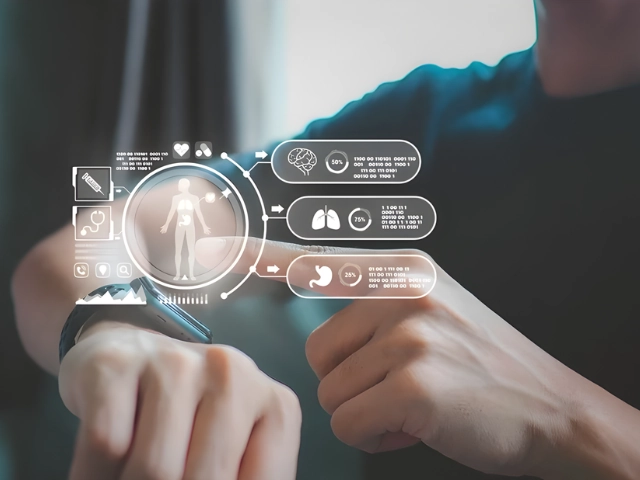
What we do - Our Platforms
Scientific advances have enabled us to know more about what makes each person unique down to the gene. It has enabled us to manipulate how a cell develops. It has provided us with mass amounts of data to study about the human condition. Here at the Terasaki Institute, we aim to utilize these advancements and develop them even further to deliver personalized diagnostics and solutions.
Our technology platforms allow us to study human disease and develop therapeutics on a personalized level. Physiological models can be personalized using organ-on-a-chip and advanced computational methods such as machine learning and deep learning. Therapeutics can be personalized using devices with sensors to deliver what is needed when it is needed. Damaged organs and tissues can be addressed with personalized transplants using biomaterials that are three-dimensionally printed.
Biomaterials
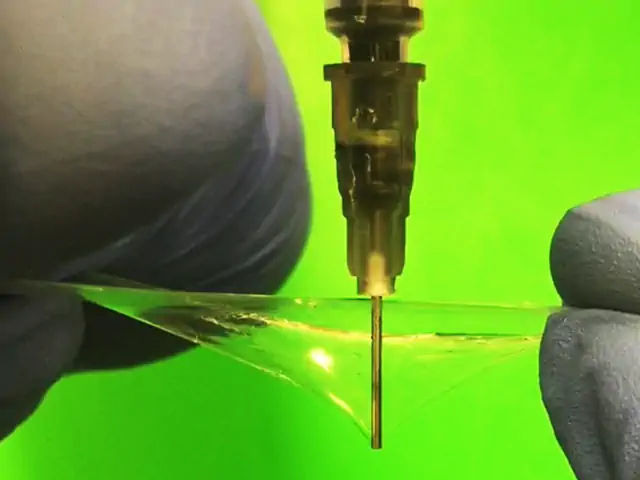
Terasaki Institute’s Biomaterials Platform pioneers the design and translation of bioinspired materials that integrate materials science, chemistry, and bioengineering seamlessly with living systems. Engineering tunable, biocompatible materials at the molecular level, the platform supports tissue regeneration, therapeutic delivery, and medical device integration including:
- Injectable Hydrogels
- Implantable Scaffolds
- Adhesive Biomaterials
- Cell-Laden Biomaterials to Encapsulate Cells
The Biomaterials Platform provides the foundation for next-generation regenerative therapies, bridging laboratory innovation with meaningful clinical solutions.
Organs-on-a-Chip
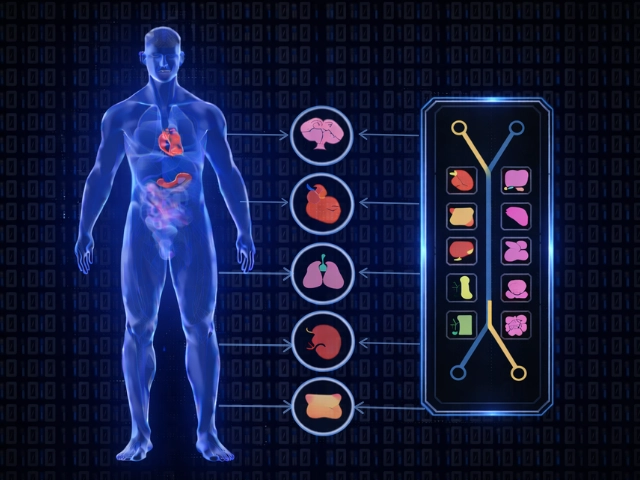
Terasaki Institute's Organs-on-a-Chip team engineers vascularized tissueoids, which are three-dimensional multicellular microtissues featuring engineered capillary networks that replicate the structure and function of living human organs. The platform integrates advanced biomaterials, cellular engineering, and embedded biosensors to enable real-time monitoring across six organ-specific systems:
- Liver: Drug metabolism, toxicity assessment, and liver disease modeling
- Heart: Contractile function, cardiotoxicity, and microvascular dysfunction
- Gut: Epithelial barrier integrity and drug absorption
- Adipose: Long-term adipogenesis and metabolic disease research
- Brain Cancer: Tumor-vascular interactions and therapeutic screening
- Lymph Node: Adaptive immune and immunosenescence responses for cancer vaccine screening
AI/ Bioanalytics
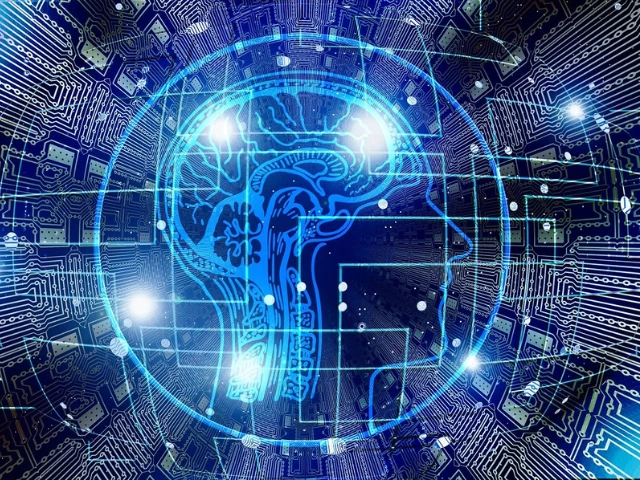
Terasaki Institute’s AI/Bioanalytic Platform integrates AI, computational biology, and high-throughput sequencing to accelerate innovation across cancer, organ transplantation, biosensors, and organoids. Across these domains, the platform:
- Integrates clinical, multi-omics, imaging, and functional data to build AI models for disease progression, microenvironments, and drug responses of cancer and organ transplantation.
- Synthesizes highly diverse datasets, ranging from clinical data, molecular profiles, and biosensor outputs.
By bridging AI, biology, engineering, and multimodal data, the platform directly accelerates the translation of smart materials and physiologically relevant AI models into precision health.
Organoids
The Terasaki Institute's Organoid Core Technology Platform advances the study of human tissue by developing micro-organoids—small, engineered tissue models that are more consistent, reliable, and scalable than traditional organoids.
These micro-organoids are encapsulated within exocellular matrices or specially designed biomaterial environments that promote faster and more uniform growth. This approach enables:
- Compatibility with high-throughput imaging and phenotypic screening
- More efficient diffusion of nutrients and oxygen to support organoid growth and differentiation
- Compatibility with automated systems for faster, large-scale organoid culture and drug screening
- Suitability for studying interactions between immune cells and pathogen infections
Because micro-organoids are uniform and easy to produce, researchers can run simultaneous experiments to assess drug effectiveness, toxicity levels, dose–response effects, and disease progression.
When combined with advanced imaging and molecular analysis, this platform delivers more accurate and predictive data, helping researchers develop safer and more effective therapeutic treatments.
Sensors
Led by Dr. Yangzhi Zhu and his lab, Terasaki Institute’s Sensors Platform advances next-generation biointegrated technologies to deliver real-time, clinically actionable health data through implantable, wearable, and point-of-care sensors. Key capabilities include:
- Integration of biomaterials, microfabrication, and biointerface engineering
- Soft, biocompatible materials that conform to living tissues while ensuring stable, long-term performance
- Detection of biomarkers, including metabolites, proteins, and inflammatory signals
- Integrated electronics and data analytics transforming complex biological measurements into clinical insights
In collaboration with Mayo Clinic, we developed a sensor technology that enables real-time identification of organ damage markers, improving organ viability evaluation, risk stratification, and patient outcomes.