
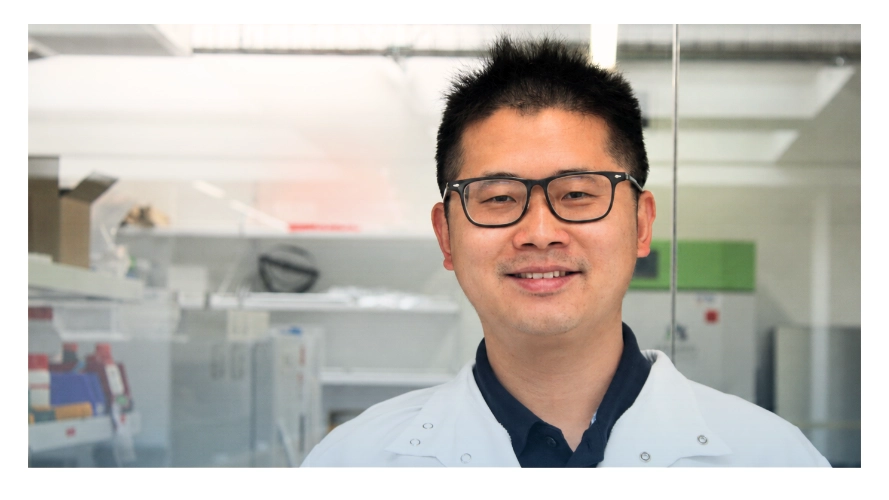
Los Angeles, CA – September 28, 2026 - The Terasaki Institute for Biomedical Innovation has been awarded an NIH U01 research grant of approximately $6.9 million to develop a first-of-its-kind multimodal smart contact lens platform for monitoring post-traumatic stress disorder in real-world settings. The multi-institutional project brings together Principal Investigators Dr. Yangzhi Zhu of the Terasaki Institute, Dr. Nanthia Suthana of Duke University, and Dr. Ximin He of UCLA, combining complementary PTSD remains one of the most consequential and least objectively measurable neuropsychiatric conditions affecting individuals today. Current clinical tools depend on self-report and in-office assessment, which are unable to capture the real-time physiological and neural dynamics that drive the disorder. This gap represents a significant barrier to both scientific understanding and the development of more effective interventions. The NIH U01 award positions the Terasaki Institute to address that barrier directly, through a multimodal ocular bioelectronic platform designed for the complexity of daily human experience.
“The signals that define PTSD, heightened arousal, stress hormone fluctuations, shifts in emotional state, happen continuously and outside the lab,” said Dr. Yangzhi Zhu, Principal Investigator and Assistant Professor at the Terasaki Institute. “By building a system that captures those signals in real time and links them directly to neural activity in the amygdala and
hippocampus, we can begin to map what is actually happening in the brain during the moments that matter most to patients.”
The platform will combine smart contact lens technology, soft biomaterials, and synchronized data-capture tools to monitor physiological and behavioral changes associated with stress and emotional-state dynamics. Rather than relying on isolated clinical snapshots, the system is designed to support longitudinal, real-world assessment of how biosignals evolve across laboratory and naturalistic environments.
The system will be deployed with ambulatory participants who already carry implanted intracranial recording devices, enabling simultaneous capture of peripheral biosignals and deep neural activity in both laboratory and naturalistic at-home settings. By establishing the relationship between wearable biosensor outputs and brain-level emotional processing, the project aims to lay the scientific foundation for future closed-loop monitoring and intervention technologies in PTSD and related affective disorders.
“This NIH U01 award reflects the Terasaki Institute’s commitment to developing tools that operate where patients actually live,” said Dr. Xiling Shen, Acting Director, Terasaki Institute for Biomedical Innovation. “Dr. Zhu’s platform represents a meaningful step toward objective, continuous monitoring of PTSD, and we look forward to seeing how this work shapes the next generation of wearable biosensing technologies.”
The award advances the Terasaki Institute’s strategic mission to translate bioengineering innovation into tools with direct clinical and societal relevance. The convergence of wearable biosensing, neural recording, and real-world deployment represents a meaningful expansion of the Institute’s capabilities and a platform with long-term potential across mental health, neurology, and precision medicine.
The project brings together expertise in bioengineering, neuroscience, and clinical translational research, reinforcing the Terasaki Institute’s commitment to advancing transformative technologies from the laboratory to real-world patient care.
For more